 PersistIQ
Why Knowing What to Change Isn’t the Same as Changing It: A Guide to Transformational Life Coaching
Knowing what needs to change and actually changing it happen in two different parts of the brain. Intellectual logic stays in the conscious mind. Meanwhile, automatic reactions live deep in the nervous system. Transformational life coaching works directly with subconscious patterns to create lasting shifts that simple willpower can’t match. Explore how working with a transformational leadership coach creates true alignment.
Self-awareness has earned its good reputation. We can name a trigger, spot a pattern, and trace a reaction back to its source. But we see this all the time with our clients: understanding a pattern doesn’t always make it easier to change.
Most of what you do in a day runs automatically. The conscious mind reads, analyzes, and sets morning routines. It is not what’s driving your reaction when someone cuts you off in traffic or when a certain tone of voice makes your chest tighten.
The subconscious does not respond to reasoning. It responds to emotion, repetition, and safety. It keeps old patterns running because they once protected you or helped you belong, long before you had any say in the matter.
Nothing is wrong with you! Take a moment to breathe that in. What you’re describing is the ordinary distance between understanding a pattern and changing it. These are two separate processes, carried out by two different parts of your mind, and the first has never been enough to complete the second.
Why You Keep Repeating the Same Patterns
Most people come to coaching with a pretty good idea of what’s going on. They already know their pattern, triggers and may even know exactly what happens next. And yet, somehow, knowing all of that hasn’t been enough to change it.
That’s often where subconscious blocks come in. These can be old beliefs, emotional patterns, or ways of protecting yourself that started making sense when you were younger. Usually, they developed for a reason. The problem is that what helped you cope then may not be helping you much now.
Take someone who learned early on that being useful was a good way to feel loved. As an adult, they may have a hard time saying no, even when they’re exhausted. Or maybe praise was mostly tied to achievement, which can make slowing down feel uncomfortable. Someone who grew up around a lot of conflict might avoid difficult conversations altogether, even when speaking up would actually make things easier.
None of these patterns means something is wrong with you. They made sense at the time. In some cases, they probably helped you feel safe, connected, or in control.
The trouble starts when those same habits keep showing up long after the situation has changed.
That’s also why simply understanding a pattern doesn’t always make it disappear. Knowing why something happens is useful, but it doesn’t necessarily change the underlying belief or response.
Where Transformational Life Coaching in the Netherlands Fits
Anyone who has spent time in personal development arrives with a collection of tools. Meditation apps. Affirmations. Sometimes, previous coaching or therapy. Those approaches have value. They may simply never have reached the layer where your particular patterns are held.
There is a local wrinkle worth naming here. Dutch culture rewards saying the thing plainly, and that directness is genuinely useful. It can also leave the impression that once something has been named honestly, it has been dealt with. Patterns do not work that way. A pattern can be described out loud, accurately, in front of other people, and carry on exactly as before.
One practical note before choosing anyone. Coach is not a protected title in the Netherlands. Psychologists and psychotherapists appear in the BIG register, while coaching sits outside that system, which means training and methods vary considerably from one practitioner to the next. It is fair to ask what a coach actually works with and whether their method reaches subconscious patterns or stays focused on goals and accountability.
That question is where inside-out transformation separates itself. Rather than managing patterns from the outside with better strategies, it works to dissolve the subconscious blocks generating them.
What Coaching for Lasting Change Actually Works On
If being self-aware were sufficient, you would have resolved this. Something further has to happen.
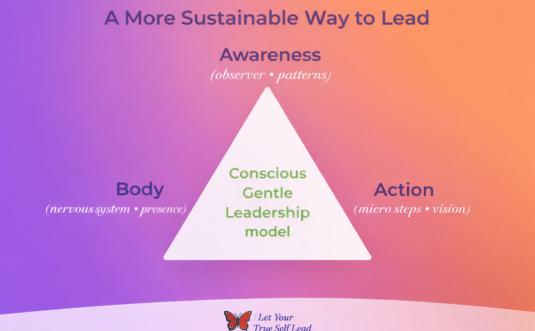
Change that lasts involves the nervous system and the emotional body alongside the thinking mind. It works through new felt experience rather than new information. In practice, transformational coaching moves through four layers.
Slowing Down Enough to Feel
A big part of this work is slowing down enough to actually feel what’s happening. We often see clients who can explain their emotions very clearly but have learned to stay one step removed from them. They can tell us why they’re angry, anxious, or overwhelmed, but that doesn’t necessarily mean they’ve processed their feelings.
Getting to the Belief Underneath.
Sometimes a client knows they have a limiting belief but can’t simply reason their way out of it. That’s because these beliefs usually weren’t created through logic in the first place.
Helping The Body Feel Safe With Something New.
It’s one thing to know that a different response would be healthier. It’s another to actually feel safe enough to respond that way. We may see this in clients who know they can set a boundary, speak up, or slow down, yet still feel a strong urge to return to what feels familiar. Building a sense of safety gives the body room to try something different.
Practicing The New Response.
Old patterns become familiar because they’ve been repeated over and over. New responses need the same opportunity. We encourage clients to practice these changes in real situations, starting small and building from there. It can feel slow, but repetition is what helps a new response become something they can rely on rather than something they have to consciously remember every time.
Somewhere to Start This Week
The distance between knowing and changing says nothing about your effort or your intelligence. It is a question of where each one lives. Insight sits near the surface. Patterns sit in the foundation, and foundations are not renovated by reading about them.
Here is a starting point that requires nothing from you but attention. The next time you catch yourself mid-pattern, set the analysis aside. Notice what your body is doing instead. The tightness in your jaw. The shallow breath. The heat rising in your chest, and the quiet impulse to leave the room.
That noticing is your first point of contact with the place where change actually takes place. It is also roughly as far as this work goes on your own, because patterns that formed in relationship with other people seldom resolve in isolation.
The layer underneath is what transformational coaching at Let Your True Self Lead is built around. When noticing stops being enough, start a conversation about where you are now and what would genuinely help.
What to Know Before You Begin
How long does transformational coaching take to create real results?
Timelines vary depending on individual goals and the extent to which the patterns are ingrained. Some people notice clear internal shifts within weeks, while others take several months to work through deeper layers. Real transformation focuses on creating changes that hold rather than rushing the process.
Is transformational life coaching the same as therapy?
No. Therapy typically explores past experiences, processes clinical trauma, and manages mental health conditions. Transformational coaching focuses on current awareness and forward movement, helping you tap into inner resources to foster lasting personal growth. If you are navigating mental health distress, consulting a licensed clinician is the best path forward.
What if past coaching attempts did not deliver lasting change?
Standard coaching often remains on the surface, focusing heavily on outer goals, action steps, and accountability. Inside-out transformational work engages the subconscious mind, nervous system, and emotional patterns. This creates a foundation in which new behaviors occur naturally rather than through constant force.
Book Your Transformational Discovery Session
Disclaimer: We love sharing insights, practical tools, and reflections to support your journey toward inner alignment and conscious living. However, the content on this site serves only educational and inspirational purposes. It is not a substitute for professional mental health therapy, medical advice, or psychiatric diagnosis. If you are experiencing mental health struggles or emotional trauma, please consult a licensed healthcare professional. Your safety, health, and well-being remain the top priority.