
 PersistIQ
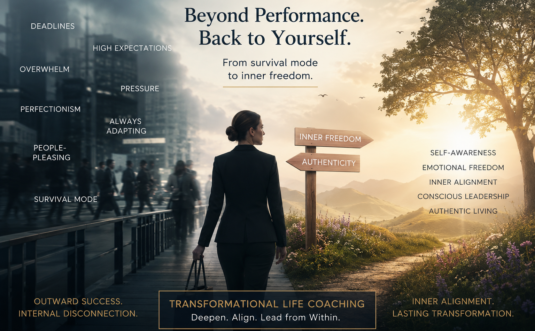
True leadership isn’t about having the highest IQ or the sharpest technical skills; it’s about emotional intelligence (EQ). By building self-awareness and learning to respond rather than react, through Emotional Intelligence Coaching, you can break old habits, lower your stress, and transform both your professional impact and your personal life.
How Emotional Intelligence Coaching Transforms the Way You Lead and Live
You’ve probably noticed a strange pattern in your professional life. The most technically brilliant people don’t always make the best leaders; they create a cloud of subtle tension and dysfunction around them. On the flip side, the managers everyone genuinely wants to follow are rarely the ones with the most impressive academic credentials.
This gap between technical skill and human connection points to something vital. Emotional intelligence.
The term shows up everywhere. You see it in leadership books, performance reviews, and corporate workshop titles, to the point that it has almost lost its meaning. Now, it’s a nice addition to a résumé under “Soft skills”. But when you ask what it actually looks like in practice, the room usually goes quiet.
This is where the real problem hides. People often treat emotional intelligence as a fixed personality trait. It is supposed to be innate. This misconception costs leaders years of unnecessary struggle. They end up trapped behind a mask of success, which only hides their self-doubt and fatigue. At the same time, the turmoil around them is left unmanaged.
Let’s examine what emotional intelligence is, why it is more important to your life than just IQ, and how to develop it from the inside out.
What We’ll Explore Together
The four foundational pillars that form real emotional awareness. Why high EQ drives deep team trust and sustainable business outcomes. The subconscious reasons why leaders struggle to change old behaviors. How looking inward transforms both your leadership style and your personal peace.
The Truth Behind Emotional Awareness
Emotional intelligence isn’t about simply being nice to people. It isn’t about suppressing your frustrations or keeping up a calm exterior while your mind churns with stress. At its core, this capacity consists of four connected areas that work together:

Self-Awareness
This means recognizing your emotional states as they happen. It means noticing the stress when it first surfaces, not hours later during a sleepless night.
Self-Regulation
This builds directly on your awareness. Once you notice an emotion, can you choose how to respond rather than instantly reacting? This doesn’t mean bottling things up. True regulation means letting yourself feel an emotion fully while remaining in the driver’s seat of your actions.
Social Awareness
This broadens your perspective. In a meeting, do you know how to read between the lines? When a team member’s body language and words don’t match, do you notice? Instead of responding to your own presumptions, this helps you perceive what’s truly happening in a room.
Relationship Management
This integrates the three above skills into your everyday conversations. It’s about how you use these skills to manage challenging discussions, build strong team trust, and motivate others without resorting to coercion or force.

These four areas form a single ecosystem. If one part is weak, the whole structure suffers. You can’t manage relationships well if you misread social dynamics. You can’t read a room if you aren’t aware of your own internal stress.
Why EQ for Leaders Shapes Outcomes More Than Technical Expertise

Imagine two different managers dealing with the same high-stakes deadline.
The first manager is a technical genius. But under pressure, they micro-manage and send frantic late-night emails. The project gets done, but the team is completely drained, and two key employees start looking for new jobs the next week.
The second manager has excellent emotional intelligence, even if he may not be a technical expert. He notices the team’s rising panic and calls a quick meeting to re-prioritize. The group comes together and completes the task. Together, they are quite proud of what they have created.
When a leader lacks emotional capacity, the whole system bottlenecks. Information stops flowing because people are afraid of a bad reaction. Most importantly, turnover skyrockets. A leader’s high EQ acts as an invisible highway that allows everything else to move faster and more smoothly.
The Uncomfortable Truth About Why True EQ is Hard to Build

If developing emotional intelligence were as easy as reading a book, everyone would be a master of it. The reality is that our emotional habits are deeply ingrained. They are wired directly into our nervous systems because they served a purpose earlier in our lives.
For example, if you grew up in a conflict-ridden environment, you may have learned to placate others to maintain peace. As a leader, you may find yourself avoiding difficult performance conversations because your basic survival instinct warns you that confrontation is dangerous.
You cannot rewrite decades of automatic behavior with willpower alone. This is why people often know intellectually that they shouldn’t get defensive when receiving feedback, yet they still feel their heart race and their walls go up the moment a critique begins.
Deep growth requires slowing down and looking at the root of these automatic reactions. It means learning to tolerate the physical discomfort of a tough emotion without rushing to fix it, distract yourself, or blame someone else.
What Happens Inside an EQ Coaching Experience

Working with an expert on your emotional intelligence looks completely different from a typical weekend leadership seminar.
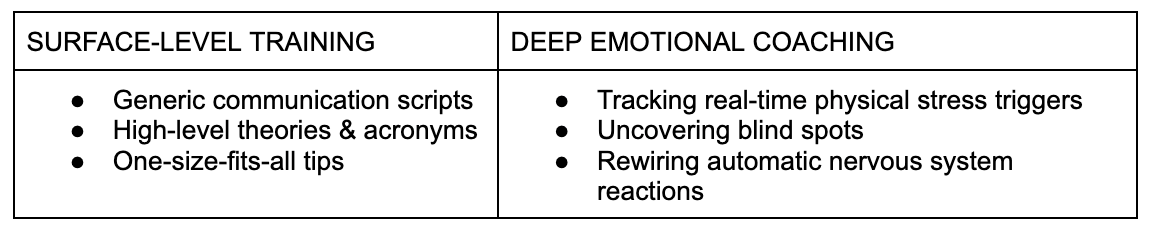
So, we begin by looking at your current baseline. Tools like the Energy Leadership Index™ help us map out how you handle energy and stress. This process makes your invisible, automatic habits completely visible.
From there, we focus on the space between a challenge and your reaction. A skilled coach helps you inhabit that brief moment where choice lives. You learn to move away from reactive stress and instead respond from alignment.
5 Daily Practices to Develop Emotional Intelligence
While long-term growth takes time, you can start building your EQ with these five simple shifts:
Shift One: Take a Two-Second Pause
When an annoying email catches you off guard, don’t speak immediately. Take one full, deep breath. This gives your rational brain a chance to catch up to your emotional reflex.
Shift Two: Expand Your Emotional Vocabulary
Move past basic words like “fine,” or “mad”. Get specific. Are you feeling dismissed or anxious? Naming the exact emotion reduces its intensity.
Shift Three: Scan Your Physical Body
Your body feels your emotions before your mind names them. Notice where you carry tension. It might be a tight jaw or hunched shoulders.
Shift Four: Trade Judgment for Curiosity
When you catch yourself reacting poorly or feeling triggered, don’t beat yourself up. Ask yourself, “What is this reaction trying to protect me from right now?”
Shift Five: Gather Blind-Spot Feedback
Ask a trusted colleague or partner for an honest assessment. Try asking, “How do I typically show up when a project is running late?” Listen completely to their answer in its entirety without defending yourself.
The Ultimate Benefit: Changing Your Relationship with Yourself

We often talk about EQ as a tool to manage others to get better work out of employees, handle clients smoothly, or keep meetings on track. But that is only half the story. The most profound shift that comes from this work is internal.
Many driven professionals are incredibly harsh on themselves. They rely on an inner critic that uses perfectionism and fear to force results. Over time, that constant internal friction leaks out, creating tension, impatience, and unrealistic expectations for everyone else around them.
When you invest in your emotional maturity, you learn how to step away from that constant self-pressure. You build a steady, reliable internal anchor.
From Knowing Better to Doing Better
We don’t need more articles telling us that emotional intelligence is important. We need the courage to actually do the real work it requires.
It asks us to slow down when everything around us is moving fast. It is challenging work, but it is also the exact line that separates an average manager from a truly unforgettable leader.
If you are ready to stop managing the symptoms of stress and start changing the underlying patterns, let’s connect for an initial conversation. We can look at where you feel blocked and identify the steps that will help you show up with clarity, confidence, and ease.
Deepening Your Awareness
How is this different from going to traditional therapy?
While both involve exploring your internal world, they have different goals. Therapy focuses primarily on healing past psychological pain and managing mental health conditions. Coaching examines how your current emotional habits show up in your day-to-day life, helping you build practical skills to achieve your future personal and professional goals.
Can I just develop EQ on my own by reading books?
Books and podcasts are excellent for understanding the concepts, but it is incredibly difficult to spot your own blind spots. A skilled coach acts as a supportive mirror, helping you see the patterns you have normalized for years and providing a safe space to practice new ways of responding.
Disclaimer: We love sharing insights, tools, and reflections to help you build conscious leadership and deep inner alignment. However, the information on this blog is for educational and inspirational purposes only. It is not a substitute for professional mental health therapy, medical advice, or psychiatric care. If you are experiencing psychological distress or trauma, please reach out to a licensed mental health professional. Your safety and well-being always come first