
 PersistIQ
Ever wonder why you still overwork or freeze during office conflict? It’s because you’re subconsciously running your career using survival habits you learned before you were seven years old. To finally take control, you can’t just think your way out of these patterns. You have to physically calm your nervous system down so your adult brain can actually run the show.
The Childhood Beliefs That Are Still Running Your Professional Life
Think back to your last major professional decision. It felt entirely rational, didn’t it?
You analyzed the data, weighed the risks, and picked a path. Except, if you look closer, you might find a hidden pattern running the show. Maybe you agreed to a massive project despite a bursting schedule. Maybe you kept quiet in a high-stakes meeting when your insight could’ve turned the tide.
We like to call these habits “work ethic” or “corporate diplomacy.” In reality, they are often ancient survival strategies, or, as psychologists call them, childhood limiting beliefs. So many high-achieving professionals look completely flawless on the outside. But underneath, they are quietly drowning in exhaustion.
When you operate out of pressure instead of presence, your oldest programming is at the wheel. To change how you lead, you have to look below the surface and inspect the foundation.
We’ll Be Focusing On
- How your childhood brain waves literally programmed your default work habits.
- Why reading books and “knowing” your flaws fails when you panic under pressure.
- How to spot the exact childhood coping mechanisms secretly ruining your boardroom behavior.
- Practical, science-backed moves to actually change your body’s stress response for good.
How Limiting Beliefs From Childhood Take Root
The human brain processes the world in unique ways during its earliest stages. Before the age of seven, a child’s brain operates primarily within theta and alpha brainwave frequencies. These are the exact states associated with deep suggestibility and hypnosis.
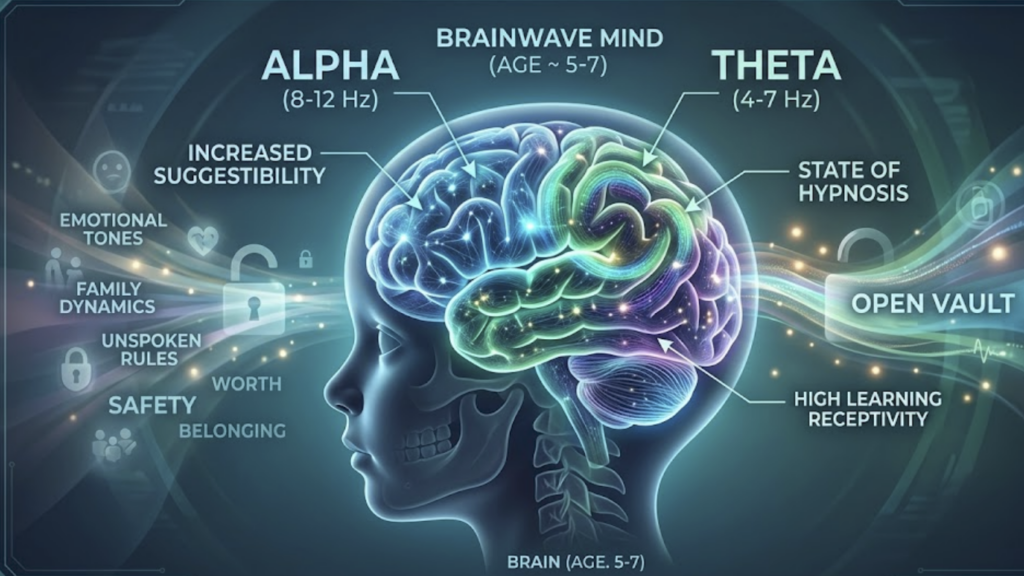
During this formative window, the subconscious mind acts as an open vault. It absorbs emotional tones, unspoken family dynamics, and subtle rules about safety, worth, and belonging.
This process serves as an essential survival mechanism. A young child lacks the cognitive maturity to evaluate whether a caregiver’s anxiety is rational or a critic’s feedback is fair. Instead, the child adapts internal rules to navigate their environment.

Consider the corporate leader who can’t stop micromanaging. If childhood approval were strictly tied to perfect school performance, the brain would wire a clear rule:
|
Your worth equals your output. |
If domestic conflict felt terrifying, the child internalizes a different rule:
|
Keep your head down and please everyone to stay safe. |
These early conclusions shape childhood beliefs and adult behavior. This acts as an invisible operating system that continues to run decades later.
The Friction Between Knowledge and Emotion
Capable adults frequently encounter a frustrating paradox.
Concepts like burnout prevention, healthy boundaries, and psychological safety do not automatically translate into real-world behavior. It is entirely common to coach a team on sustainable performance while personally harboring a deep, quiet dread of slowing down.
This disconnect highlights the profound gap between conscious logic and subconscious programming.
| Operating System | The Conscious Mind | The Subconscious Mind |
| The Job | Logic, facts, strategy, and future goals. | Emotions, memories, safety, and survival. |
| The Speed | Relatively slow and requires a lot of effort. | Exponentially faster and fully automatic. |
| The Control | Generates roughly 5% of your daily behavior. | Drives roughly 95% of your brain activity. |
You cannot think your way out of a pattern wired by emotion and biology. Because your subconscious is running 95% of the show at warp speed, it wins every single time, unless you learn how to reprogram it.
The Workplace Personalities Built in Childhood
We tend to treat the office like a professional battleground where logic and strategy rule. In reality? The modern workplace is just a giant playground for our unhealed childhood coping mechanisms. We don’t leave our past at the door when we clock in; we just wrap it in a business-casual blazer.
Here are the four most common workplace personalities that were actually built in childhood:
The Compulsive Over-Functioner
You take on three extra projects, volunteer for the weekend shift, and check your emails at midnight. This goes far beyond professional ambition. Your childhood brain associated being completely indispensable with emotional safety or validation.
The Chronic Peace-Keeper
You soften constructive feedback until it loses all meaning. You say yes to impossible deadlines to avoid disappointing a peer. If your early home environment weaponized conflict, your nervous system now treats professional disagreement as a threat to your survival.
The Reluctant Receiver
Compliments make you squirm. Accepting help feels like an immediate debt you need to pay back. You give your energy endlessly but block any support that comes your way. This pattern thrives if your early relationships came with heavy strings attached, which teaches you that vulnerability is a liability.
Frameworks for Interrupting Childhood Limiting Patterns
To actually break through your biggest professional blocks, you can’t just talk about them. You have to give your brain brand-new, real-world experiences that prove you’re safe.
Somatic Tracking
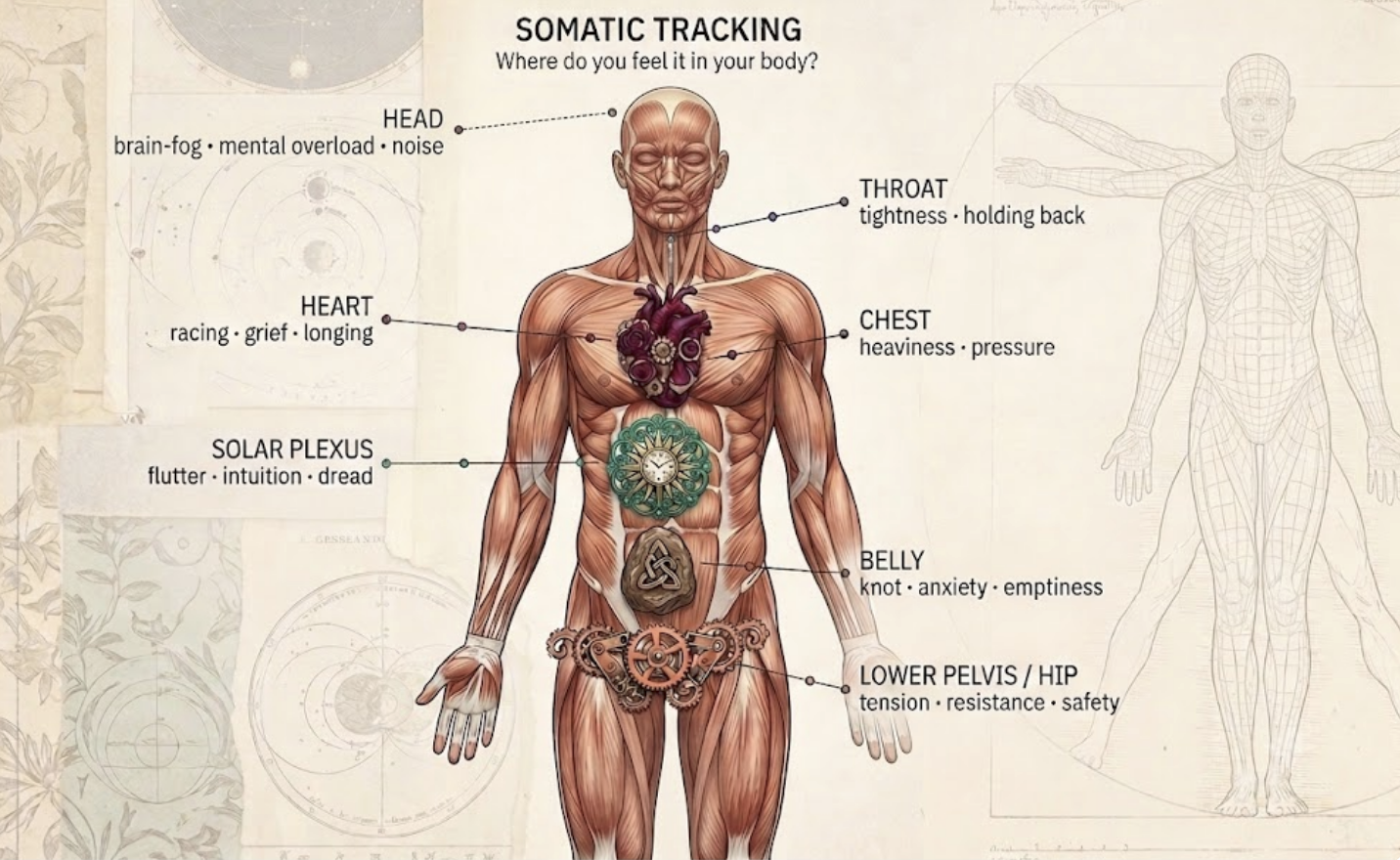
Notice the physical sensations that precede a workplace overreaction. The tight jaw, the shallow breathing, or the sudden knot in your stomach are data points. They show you exactly where the old belief lives in your body.
Nervous System Regulation
The subconscious mind struggles to tell the difference between a critical email from a CEO and a childhood threat. Taking a deliberate pause to anchor your body breaks the automatic stress loop before it dictates your response.
Targeted Visualization
The human brain processes vivid imagery with the same intensity as real-world events. Using custom neuro-auditory tools, like the visual MindMovie Method, helps gently implant new, empowering patterns directly into the subconscious.
Upgrading the Internal System
There’s a pervasive myth in the professional development world that you need to fix a broken version of yourself. That mindset is counterproductive.
The defense mechanisms you built as a child weren’t mistakes. They were highly intelligent adaptations designed to keep you safe in a specific environment. They helped you survive, grow, and achieve the baseline success you enjoy today.
You aren’t broken. You’re simply running outdated software that no longer matches your current professional reality. Updating that system doesn’t require force, guilt, or grinding. It requires deep presence, consistent curiosity, and the willingness to step back into the driver’s seat of your own career.
Leadership After the Inner Work Begins
The most impactful leaders don’t possess a secret tactical playbook. Instead, they possess a rare internal stability. One that allows them to guide a team with authentic presence. When you stop leading from your old wounds, you finally give yourself permission to step into your true power.
Ready to step into the driver’s seat of your professional life? Explore our focused Transformational Life and Conscious Leadership Coaching programs to start rewiring your deep default patterns.
To begin a quiet, confidential conversation about your leadership goals, reach out to our practice directly.
Curiosities & Clear Answers
Can limiting beliefs from childhood really impact my executive decision-making?
Absolutely. Your current leadership style often reflects early survival strategies. Subtle habits like micromanaging, dodging tough conversations, or working past your physical limits are usually reactive attempts to satisfy an old subconscious need for control or validation.
How can I tell if a career choice is a conscious strategy or a subconscious reaction?
Look for the presence of frantic urgency or physical dread. A conscious choice feels spacious, clear, and grounded, even when it’s tough. A subconscious reaction feels tight, automatic, and accompanied by an inner narrative that says you have no other choice.
What is the quickest way to spot my own subconscious professional blocks?
Pay close attention to your repeating professional frustrations. If you find yourself changing companies but experiencing the same team dynamics, boundary issues, or feelings of being undervalued, the common denominator is your internal blueprint.
How do we begin to change a pattern that has been active for decades?
We start by bringing somatic awareness to your daily triggers and intentionally calming your nervous system responses. Over time, pairing that physiological calm with advanced subconscious tools allows you to choose your actions from inner alignment rather than past fear.
Disclaimer: We are passionate about sharing insights, tools, and reflections to help you cultivate conscious, gentle leadership and inner alignment. However, the information shared on this blog is intended solely for educational and inspirational purposes. It is not a substitute for professional mental health therapy, medical advice, or psychiatric care. If you are experiencing psychological distress or trauma, please seek the support of a licensed mental health professional. We are here to guide your personal growth, but your overall well-being and safety must always come first.



[…] management habits frequently stem from earlier career pressures or personal habits. In fact, childhood-rooted limiting beliefs influence leadership styles in subtle ways, causing managers to react defensively under […]
[…] in life, such as the belief that you need to prove your worth through nonstop output. Exploring how childhood-rooted limiting beliefs influence leadership helps break those automatic […]