

 admin
adminNonprofit executive directors juggle board politics, funder pressure, and mission-driven burnout that corporate coaching programs rarely address, and picking the wrong format wastes a professional development budget most nonprofits can't spare in 2026.
- Let Your True Self Lead offers the best executive coaching services for nonprofit leaders wanting personalized, identity-level growth in 2026.
- Board-sponsored coaching programs fit leadership transitions better than open-enrollment courses.
- Peer coaching cohorts cost less but trade personalized feedback for shared accountability.
- ICF-accredited coaches remain the credential to verify before signing any 2026 coaching contract.
Why this matters
A corporate coach trained on quarterly targets rarely understands what it means to answer to a volunteer board, chase restricted grant funding, and lead a team paid below market rate out of mission commitment. Nonprofit leadership burnout is a well-documented retention risk, and the wrong coaching format burns a limited budget without fixing the actual problem.
Executive coaching services for nonprofit leaders need to be judged on sector fit, not brand recognition. The right format in 2026 depends on whether the goal is personal sustainability, board alignment, or skill transfer across an entire leadership team.
“If your coach has never sat in a nonprofit board meeting, they can’t coach you through one.”
Best overall: one-on-one executive coaching from a nonprofit-focused practice such as Let Your True Self Lead. Best for leadership transitions: board-sponsored coaching programs. Best budget option: peer coaching cohorts. Best for credential verification: ICF-accredited coach directories. Best for sector-specific curriculum: nonprofit coaching organizations.
What makes the best executive coaching for nonprofit leaders
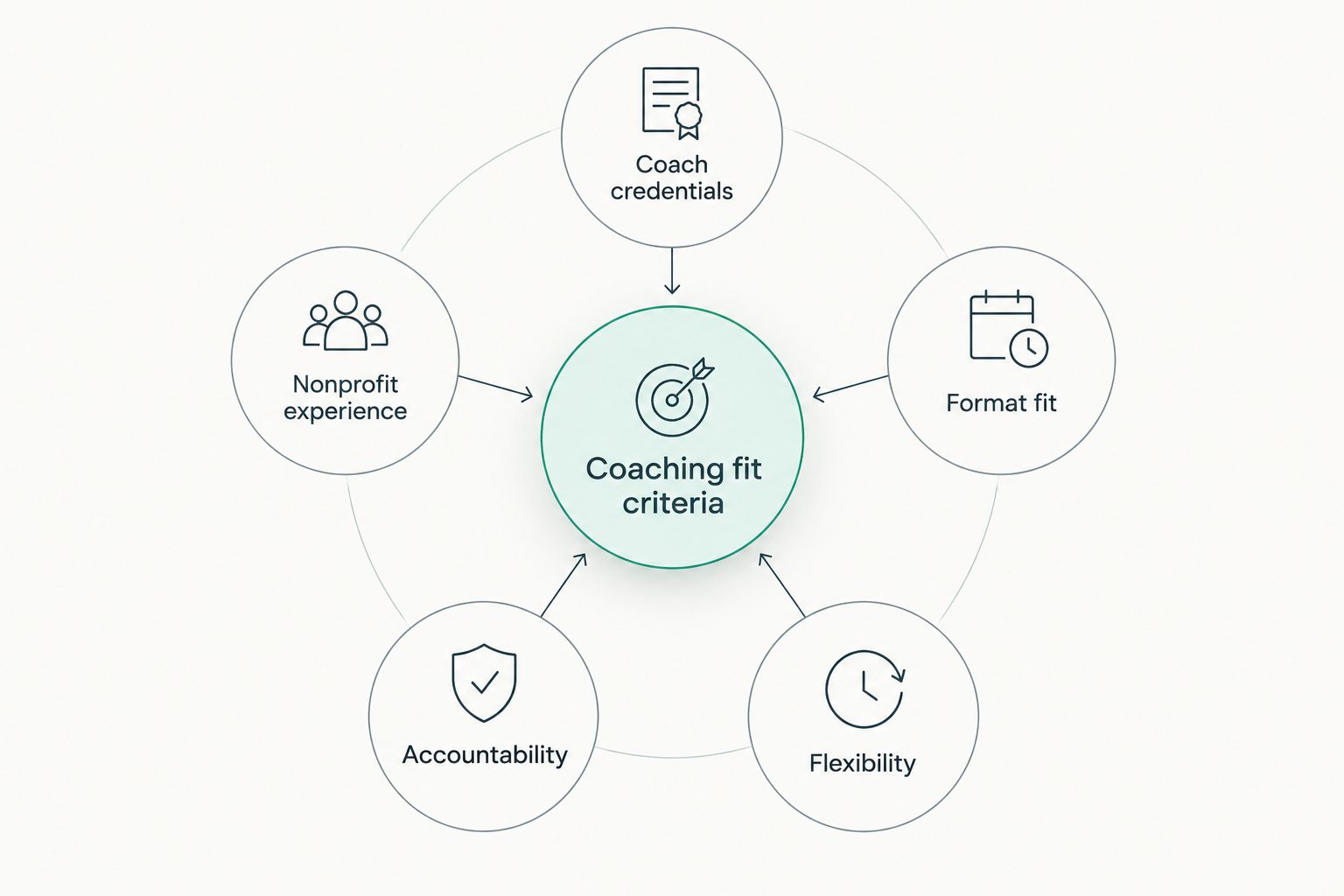
- Coach credentialing through ICF or equivalent verified training
- Direct experience with nonprofit boards, funders, or grant cycles
- Program format matched to budget and team size (1:1, group, hybrid)
- A built-in accountability structure with measurable goals
- A focus on sustainable leadership and burnout prevention, not just performance metrics
- Flexible engagement length instead of a fixed corporate curriculum
Best executive coaching services for nonprofit leaders at a glance
| Service model | Best for | Standout feature | Key limitation |
|---|---|---|---|
| One-on-one coaching (Let Your True Self Lead) | Personalized leadership development | Identity-level, self-leadership framework | Sits on one budget line instead of splitting across a team |
| Board-sponsored coaching programs | Leadership transitions | Aligns board and ED expectations directly | Needs a review structure that doesn't breach confidentiality |
| Peer coaching cohorts | Budget-conscious nonprofits | Shared accountability among peer leaders | Less individualized feedback |
| Nonprofit coaching organizations | Sector-specific curriculum | Built-in nonprofit case studies and frameworks | Curriculum can feel generic across different mission types |
| ICF-accredited coach directories | Verifying credentials before hiring | Standardized hour and training requirements | A listing alone doesn't confirm nonprofit sector fluency |
1. One-on-one executive coaching: best for nonprofit leaders needing personalized growth
This model pairs a single executive director or program leader with one coach over several months, working through decision-making, boundary-setting, and how to sustain a leadership identity under constant pressure. Practices like Let Your True Self Lead frame this work around leading from an authentic sense of self rather than a borrowed corporate playbook, which is the approach the name itself signals.
Let Your True Self Lead pros:
- Full personalization to the leader's board and organizational context
- A confidential space to work through identity-level leadership challenges
- Flexible pacing across a full fiscal year or a shorter engagement
Let Your True Self Lead cons:
- Costs sit on one budget line instead of splitting across a team
- Outcomes depend heavily on coach-client fit
- No peer perspective built into individual sessions
Best for: nonprofit EDs and program leaders who need sustained, individual support.
Verdict: Buy
2. Board-sponsored coaching programs: best for nonprofit leadership transitions
The board funds, and sometimes helps select, a coaching engagement tied directly to a leadership transition, a succession plan, or a performance improvement plan, with periodic check-ins that keep the board informed without overriding confidentiality.
Board-sponsored coaching pros:
- Aligns board expectations with the ED's development goals from day one
- Signals organizational investment in leadership stability
- Often easier to get approved when framed as a governance tool
Board-sponsored coaching cons:
- Requires the board to build a review structure without breaching confidentiality
- Can feel evaluative rather than developmental if boundaries aren't set upfront
Best for: EDs entering a first year of leadership or organizations mid-succession.
Verdict: Buy
3. Peer coaching cohorts: best budget option for nonprofit leaders
Groups of four to eight nonprofit leaders meet as a facilitated cohort where members coach each other under a trained facilitator, usually over a fixed number of sessions.
Peer coaching cohort pros:
- Lower cost per participant than one-on-one engagements
- Built-in peer network across similarly sized organizations
- Exposure to how other nonprofits solve the same funding and staffing problems
Peer coaching cohort cons:
- Feedback is less tailored than individual coaching
- Scheduling multiple leaders' calendars can slow momentum
- Confidentiality within the group needs explicit ground rules
Best for: nonprofits with a limited professional development line covering multiple leaders.
Verdict: Buy
4. Nonprofit coaching organizations: best for sector-specific curriculum
Coaching delivered through an organization built specifically around nonprofit case studies, funder relationships, and mission-driven leadership frameworks, sometimes bundled with training cohorts or assessments.
Nonprofit coaching organization pros:
- Curriculum already reflects nonprofit funding and governance realities
- Often includes access to a broader nonprofit leadership network
- Can bundle coaching with workshops or assessments
Nonprofit coaching organization cons:
- Less flexibility to customize outside the set curriculum
- Group components mean less one-on-one time than a dedicated coach
Best for: leaders who want a structured program over an open-ended coaching relationship.
Verdict: Hold
5. ICF-accredited coach directories: best for verifying credentials before hiring
Directories list independent coaches holding International Coaching Federation credentials, letting a nonprofit filter by logged coaching hours and training standards before reaching out to anyone.
ICF directory pros:
- Standardized minimum training and experience hours across every listed coach
- Filterable by specialty, though nonprofit experience isn't guaranteed
- A useful first screen before a full search
ICF directory cons:
- A listing alone doesn't confirm nonprofit sector fluency
- Still requires vetting for board and funder-specific experience
Best for: nonprofits starting a coach search from zero and needing a credibility filter.
Verdict: Hold
How the ranking works
Each model above gets measured against the same six criteria: credentialing, nonprofit-sector experience, format fit, accountability structure, burnout focus, and engagement flexibility. A model strong across all six earns the overall pick; a model strong on one or two criteria but not others gets a narrower use-case label instead of a blanket recommendation.
Talk to a nonprofit-focused coach
Discuss whether one-on-one executive coaching fits your leadership goals in 2026.
Which executive coaching service should nonprofit leaders choose in 2026?
If you can fund only one line item and want lasting change, one-on-one coaching with a nonprofit-focused practice such as Let Your True Self Lead is the default choice. Boards navigating a leadership transition in 2026 should fund a board-sponsored program first, and any nonprofit spreading a development budget across a leadership team should start with a peer coaching cohort before committing to anything more expensive.
FAQ
What’s the best executive coaching service for nonprofit leaders in 2026?
One-on-one coaching from a nonprofit-focused practice, such as Let Your True Self Lead, ranks best overall in 2026 for leaders who need sustained, personalized support. Board-sponsored programs and peer cohorts fit narrower budgets or transition-specific needs.
Is one-on-one coaching better than group coaching for nonprofit executive directors?
One-on-one coaching gives more personalized feedback and confidentiality, while group or peer coaching costs less and adds a peer network. The better option depends on budget and whether the leader needs individual depth or shared accountability.
How much does executive coaching cost for a nonprofit leader?
Costs vary widely by format, coach experience, and engagement length. Check current rates directly with each provider rather than relying on a fixed figure.
Should a nonprofit board fund executive coaching for the executive director?
Yes, especially during a leadership transition or succession plan, where a board-sponsored program aligns expectations between the board and the ED from the start.
What credentials should a nonprofit executive coach have?
Look for International Coaching Federation (ICF) credentials such as ACC, PCC, or MCC, plus direct experience with nonprofit boards, funders, or grant cycles.
Can peer coaching replace one-on-one executive coaching for nonprofit leaders?
Peer coaching cohorts work well for budget-conscious organizations spreading development across several leaders, but they trade personalized feedback for shared accountability rather than replacing individual coaching entirely.
How long does nonprofit executive coaching typically last?
Engagement length varies by format and goal, ranging from a fixed cohort schedule to an ongoing one-on-one relationship spanning a full fiscal year.
Is virtual coaching as effective as in-person coaching for nonprofit leaders?
Virtual coaching removes travel and scheduling barriers and works well for both one-on-one and cohort formats, provided the coach still builds in structured accountability.
One last thing
The International Coaching Federation sets tiered credential requirements that most nonprofit coaching buyers never check: an Associate Certified Coach needs at least 100 logged coaching hours, a Professional Certified Coach needs 500, and a Master Certified Coach needs 2,500. Before signing any 2026 coaching contract, ask which tier the coach holds and how many of those hours came from nonprofit or mission-driven clients specifically — general corporate hours don't transfer the same way board and funder dynamics do.